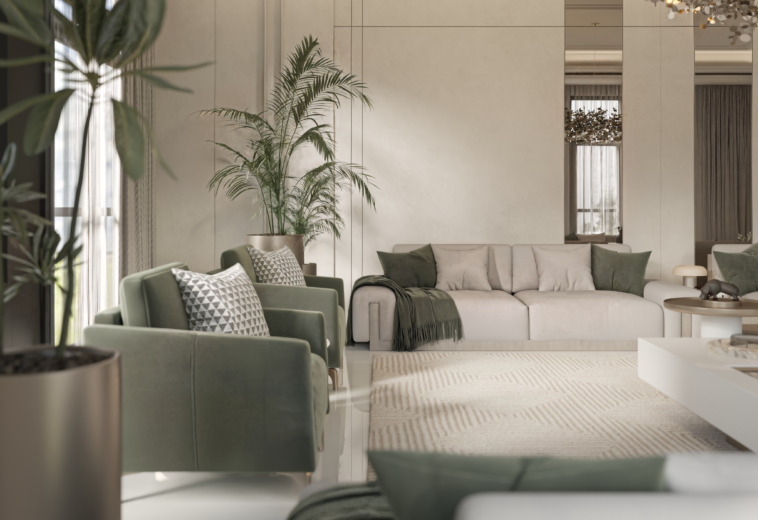

Restaurant Interior Design Dubai
Restaurant Interior Design Dubai
- admin2
- 0 comments
- 24 views
Dubai’s food and beverage scene is one of the most competitive hospitality markets on the planet. In 2026, restaurant interior design in Dubai is no longer a finishing touch — it is a revenue driver. The right layout, materials, and spatial identity directly influence table turnover, average spend, dwell time, and the viral social content that fills your reservation book. At Sisterly Interior Decoration LLC, we design and deliver restaurant interiors across Business Bay, Downtown Dubai, DIFC, JBR, and every major F&B district in the city — from intimate cafés to large-scale fine-dining concepts. This guide covers everything a restaurateur or F&B investor needs to know before breaking ground.
Key Takeaways
- Restaurant interior design in Dubai costs AED 3,800–10,800/sqm for most concepts, with premium builds exceeding AED 21,500/sqm.
- Biophilic design, acoustic management, and minimalist luxury are the dominant 2026 trends shaping Dubai’s F&B scene.
- DED licensing, municipality NOC, and Civil Defence clearance are mandatory before opening.
- Ghost kitchens and delivery-first layouts require a fundamentally different spatial logic to traditional dining rooms.
- We manage the full concept-to-handover journey — design, documentation, approvals, fit-out, and FF&E procurement.
Why Restaurant Interior Design in Dubai Is Business-Critical
Dubai diners are among the most design-literate consumers in the world. A poorly executed interior communicates low quality long before the menu arrives. Conversely, a well-executed restaurant interior design in Dubai can add 20–35% to average spend by communicating premium positioning at every touchpoint — the entrance, the bar, the table setting, the lighting, and the restroom finish. In a city where new F&B concepts open weekly, differentiation through design is not optional.
Beyond aesthetics, spatial decisions have direct operational consequences. Staff circulation paths, kitchen pass placement, acoustic zoning, and seat density all affect service speed and labour cost. We approach every restaurant interior design Dubai project as a business optimisation exercise, not a decoration exercise. Our clients in Business Bay, DIFC, and Downtown Dubai consistently report shorter time-to-revenue and stronger opening-month reviews when spatial logic is built into the design from day one.

Restaurant Interior Design Costs in Dubai — 2026 Pricing
Budgeting accurately is the first challenge for any F&B investor. Below are 2026 all-in fit-out cost ranges for restaurant interior design in Dubai, based on completed projects and current contractor pricing. All figures include design fees, construction, finishes, MEP works, and joinery. FF&E (furniture, fixtures, and equipment), AV, and kitchen fit-out are typically quoted separately and are noted accordingly.
| Restaurant Type | Floor Area | All-In Fit-Out Cost (AED) | Cost Per Sqm (AED) |
|---|---|---|---|
| Small Café / QSR | Under 100 sqm | 350,000 – 700,000 | 3,800 – 7,500 |
| Casual Dining | 100 – 300 sqm | 700,000 – 2,000,000 | 5,400 – 8,600 |
| Fine Dining / Prestige | 300+ sqm | 2,000,000 – 5,000,000+ | 8,600 – 10,800+ |
| Ultra-Premium / Flagship | Any | 5,000,000+ | 10,800 – 21,500+ |
| Ghost Kitchen / Dark Kitchen | 30 – 150 sqm | 120,000 – 450,000 | 2,500 – 4,500 |
What Drives Cost: Kitchen, AV, Materials, and Concept Complexity
The four biggest cost levers in any restaurant interior design Dubai project are: (1) kitchen infrastructure — extraction systems, grease traps, and gas runs can add AED 200,000–800,000 depending on concept type; (2) acoustic treatment — engineered panels, floating ceilings, and sound-absorbent materials add AED 50,000–300,000 but directly protect revenue by controlling the dining experience; (3) imported materials — Italian marble, solid brass fixtures, and bespoke timber joinery command 40–60% premiums over local alternatives; and (4) concept complexity — multi-level spaces, feature ceilings, and custom lighting rigs each add to both design hours and construction cost.
Regulatory compliance costs are often underestimated. Civil Defence requirements, municipality structural submissions, and DTCM licensing (for hotel F&B concepts) each require dedicated drawings and consultant fees. We build these costs into every restaurant interior design in Dubai proposal upfront so there are no surprises at permit stage.
Furniture, AV, and FF&E: Typically Quoted Separately
Most fit-out contracts in Dubai’s restaurant interior design market separate the base build from FF&E procurement. Budget AED 800–2,500 per cover for seating, tables, and soft furnishings in mid-range concepts. AV systems (background music zoning, outdoor speakers, IPTV) typically run AED 80,000–400,000. Custom furniture manufactured locally in Dubai costs 30–50% less than imported pieces with comparable lead times.
Tip: Always confirm whether a contractor’s quote includes municipality-approved shop drawings. In Dubai, unapproved changes on site can trigger stop-work orders and costly rework. Our commercial design service includes full documentation packages for all authority submissions.

2026 Restaurant Interior Design Trends in Dubai
Dubai’s F&B design scene moves faster than almost any other market. These are the five trends shaping restaurant interior design in Dubai in 2026, based on what we are delivering for clients and what we are seeing drive covers and revenue.
Minimalist Luxury: Marble, Timber, Brass
The era of maximalist, theme-park restaurant design in Dubai is giving way to refined restraint. Calacatta marble surfaces, oiled timber panels, and unlacquered brass detailing — used with discipline and precise proportion — now define the aspirational standard for restaurant interior design Dubai projects in DIFC, Downtown, and Palm Jumeirah. Less is specified, but each element is specified with intent. The result is interiors that photograph beautifully, age gracefully, and communicate quality without the maintenance burden of elaborate feature pieces.
Biophilic Design and Dwell-Time Strategy
Biophilic design — the deliberate integration of natural materials, living plants, water features, and natural light — consistently extends dwell time in F&B environments. Dubai’s high-AC interiors have historically been hostile to biophilic elements, but advances in vertical garden irrigation systems and low-light plant selection have made living walls practical for commercial use. We specify species and irrigation systems rated for Dubai’s humidity and indoor lighting conditions. Extended dwell time directly increases beverage attachment rates and dessert orders, making biophilic investment a measurable return in restaurant interior design Dubai projects.
Acoustic Engineering for F&B Environments
Noise is the single most cited complaint in Dubai restaurant reviews. Hard surfaces — marble floors, glass facades, concrete ceilings — are acoustically hostile, yet they dominate the minimalist luxury aesthetic. The solution is acoustic engineering that is invisible to the guest: perforated timber panels backed with acoustic insulation, upholstered banquettes designed to absorb mid-frequency sound, floating ceiling baffles integrated into the lighting layout, and carpet-tile zones in high-traffic paths. Well-executed acoustic management can reduce ambient SPL by 8–15 dB without sacrificing the visual language of the design. This is now a standard deliverable in our restaurant interior design in Dubai projects.
Brand-Driven Spatial Identity
The strongest restaurant brands in Dubai treat every square metre of their interior as a brand communication channel. From the door handle material to the staff uniform colour to the scent diffused in the entrance vestibule, every sensory cue is designed deliberately. We work alongside brand strategists and F&B operators to translate brand values into spatial decisions — ensuring that a restaurant interior design Dubai project delivers a guest experience that is coherent, memorable, and replicable across multiple locations if the operator scales.
Instagram-Worthy Design — Photography as Marketing
In Dubai’s social-media-driven dining market, user-generated content is the most cost-effective marketing channel available to an F&B operator. We design deliberate photography moments into every restaurant interior design in Dubai project: a feature wall at seated eye level that frames perfectly in portrait orientation; a bar setup that reads as luxury in a 9:16 Stories crop; entrance lighting that flatters skin tones and eliminates harsh shadows. These design decisions cost nothing extra to execute during construction but generate thousands of organic impressions every week once the restaurant is open. Photography-friendly design is now a line item in our design brief for every client.

Types of Restaurant Interior Design in Dubai
Fine Dining and Luxury Concepts
Fine dining restaurant interior design in Dubai demands the highest specification of materials, lighting control, and acoustic comfort. Table spacing must comply with luxury service standards — typically 1.8–2.2 m between table centres — which reduces cover count but dramatically increases per-cover spend and service quality. We design bespoke joinery, specify contract-grade upholstery rated for 100,000+ Martindale rubs, and coordinate closely with kitchen consultants to ensure the pass and service stations are integrated cleanly into the guest-facing design. DTCM-licensed hotel restaurants require additional design documentation for the authority submission, which we handle in-house.
Casual Dining and Café Design
Casual dining and café restaurant interior design Dubai projects prioritise throughput, flexibility, and brand legibility at a competitive cost per sqm. We design for high seat density without sacrificing the sense of space — using booth configurations, banquette runs, and varied table heights to create visual variety while maximising covers. Café concepts increasingly require all-day design flexibility: a morning coffee aesthetic that transitions seamlessly to a lunch and evening dining environment through lighting control and furniture reconfiguration. We build this operational flexibility into the design brief from the start.
Ghost Kitchens and Delivery-First Layouts
Ghost kitchens — delivery-only F&B operations with no public dining room — are the fastest-growing segment of Dubai’s restaurant market and the most underserved by the restaurant interior design Dubai industry. The design priorities are fundamentally different: maximise production capacity per sqm, separate delivery rider collection from staff areas, optimise cold-chain staging zones, and configure MEP to support multiple brand concepts operating simultaneously from a single kitchen. We have developed a ghost kitchen design methodology specific to Dubai’s Talabat and Deliveroo logistics patterns, including rider door positioning, bag staging height, and ventilation zoning to prevent cross-contamination between brand concepts.
Regulatory Approvals for Dubai Restaurants
Regulatory compliance is one of the most commonly underestimated phases of a restaurant interior design in Dubai project. Dubai’s approval ecosystem involves multiple authorities, and submissions must be sequenced correctly to avoid delays. We manage all authority submissions as part of our commercial fit-out service.
DED Licensing and Municipality NOC
A Dubai Economy and Tourism (DET/DED) trade licence is required before operating any F&B business in Dubai mainland. For fit-out works, a No Objection Certificate (NOC) from Dubai Municipality’s Building Permit section is required before construction can begin. The NOC submission requires a full set of stamped architectural drawings, including floor plans, sections, reflected ceiling plans, and MEP schematics. For restaurant interior design Dubai projects in free zones (DIFC, DMCC, Dubai Airport Free Zone), the relevant free zone authority replaces DED as the licensing body, with its own submission format and timelines. Expect 3–6 weeks for municipality NOC approval, depending on complexity and completeness of submission.
Civil Defence Clearance for Commercial Spaces
Dubai Civil Defence (DCD) clearance is mandatory for all commercial F&B fit-outs and covers fire suppression systems, emergency lighting, exit signage, fire rated doors, and kitchen suppression systems (Ansul or equivalent). DCD inspects the completed fit-out before an occupancy certificate is issued. For restaurant interior design in Dubai projects with commercial kitchens, the kitchen suppression system must be installed and tested by a DCD-approved contractor. DTCM licensing — required for hotel F&B outlets and some standalone restaurants seeking tourism classification — adds an additional layer of design documentation, including accessibility compliance and facility standards verification. We coordinate all of these submissions as a single managed process.
The Restaurant Design and Fit-Out Process at Sisterly Interior
Our concept-to-handover process for restaurant interior design Dubai projects follows a structured six-phase methodology developed across dozens of completed commercial fit-outs in Business Bay and across the UAE.
- Discovery and briefing — We conduct a detailed operational brief with the F&B operator covering brand positioning, cover target, average spend, service style, kitchen concept, and key guest personas. We also survey the shell-and-core space and review the landlord’s fit-out guide and authority requirements for the specific building.
- Concept design — We develop 2–3 spatial concepts, each with mood boards, material palettes, key feature renders, and an indicative cost range. Most restaurant interior design in Dubai clients select one concept direction for development at this stage, typically within 2 weeks.
- Design development and documentation — Full architectural and interior drawings are produced: floor plans, reflected ceiling plans, elevations, sections, joinery details, and MEP coordination drawings. These drawings form the basis for both authority submissions and contractor tendering.
- Authority submissions — We manage DED NOC, municipality building permit, and Civil Defence submissions. We have established relationships with permit consultants in Dubai that reduce submission-to-approval timelines significantly versus self-submission.
- Fit-out and FF&E — Construction is managed by our in-house project management team. We procure FF&E, coordinate kitchen equipment installation, manage AV and signage contractors, and conduct weekly site inspections. Typical construction duration for a restaurant interior design Dubai fit-out is 8–16 weeks depending on scope.
- Handover and snagging — A formal snagging list is prepared and resolved before keys are handed over. We assist with Civil Defence final inspection scheduling and coordinate the occupancy certificate process.
For clients who have already engaged an F&B consultant or kitchen designer, we integrate seamlessly with their workstreams. Our commercial design service page outlines full scope options and engagement models. You may also find our overview of interior fit-out in Dubai and our interior design cost guide useful context before your first conversation with us.
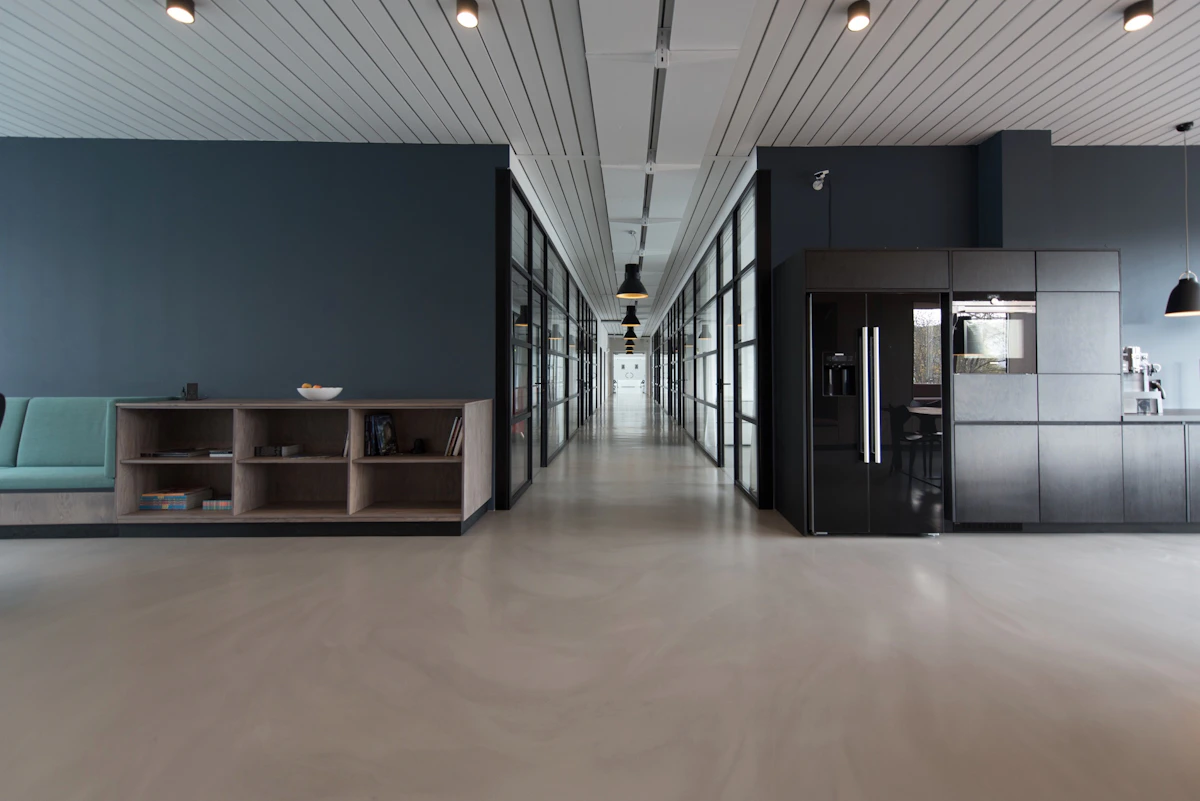
Common Restaurant Interior Design Mistakes in Dubai
After completing restaurant interior design Dubai projects across multiple districts and concept types, we see the same avoidable mistakes repeat across the industry. Here are the most costly:
- Designing the dining room first, kitchen last. The kitchen determines where the pass is, where extraction runs, and where MEP services penetrate the slab. Designing the dining room in isolation and then retrofitting the kitchen around it creates compromised service flow and expensive structural changes.
- Ignoring staff circulation. Separating guest arrival paths from staff service runs is fundamental to both the guest experience and operational efficiency. When these paths cross at high frequency, service slows and the dining environment feels chaotic.
- Under-specifying acoustic treatment. A visually stunning restaurant with uncontrolled acoustics will accumulate negative reviews within weeks of opening. Acoustic treatment is far cheaper to install during fit-out than to retrofit after opening.
- Selecting materials without maintenance consideration. Unlacquered brass requires regular polishing. Ungrouted marble joints harbour bacteria. White grout in kitchen-adjacent zones stains permanently. Every material in a restaurant interior design in Dubai project must be evaluated for its operational maintenance cost alongside its aesthetic value.
- Photography dead zones. Many Dubai restaurants have stunning feature areas that cannot be photographed from any natural seated position. Design photography moments into the layout from day one, not as an afterthought.
- Delaying authority submissions. Starting the DED NOC and municipality permit process late is the single most common cause of delayed restaurant openings in Dubai. Submit drawings as soon as the design is 80% resolved — do not wait for full completion.
Frequently Asked Questions
How much does restaurant interior design cost in Dubai in 2026?
Restaurant interior design in Dubai costs AED 3,800–10,800 per sqm for most concepts in 2026, with ultra-premium builds reaching AED 21,500+/sqm. A small café under 100 sqm typically runs AED 350,000–700,000 all-in. Casual dining (100–300 sqm) sits at AED 700,000–2,000,000. Fine dining at 300+ sqm commonly exceeds AED 2,000,000. These figures cover design, construction, finishes, and MEP. FF&E, kitchen equipment, and AV are typically quoted separately. For a project-specific estimate, contact us through our commercial design page.
What approvals do I need for a restaurant fit-out in Dubai?
You will need a DED (or free zone authority) trade licence, a municipality building permit (NOC) based on stamped architectural drawings, and a Dubai Civil Defence clearance for fire safety systems. Hotel F&B outlets and tourism-classified restaurants also require DTCM approval. The sequencing of these submissions matters — starting with the municipality NOC while DED licensing is in progress is standard practice for restaurant interior design in Dubai projects.
How long does a restaurant interior design project take in Dubai?
A typical restaurant interior design Dubai project runs 16–28 weeks from signed brief to handover: 2–3 weeks for concept design, 4–6 weeks for design development and documentation, 3–6 weeks for authority submissions (running in parallel where possible), and 8–16 weeks for fit-out construction. Complex projects with bespoke imported materials or multi-authority submissions can extend to 32–40 weeks. We provide a detailed programme at the start of every project.
What restaurant design style drives the most dwell time in Dubai?
Biophilic design — incorporating living plants, natural materials, warm lighting, and acoustic comfort — consistently produces the longest dwell times in Dubai’s F&B market. Guests stay longer when the environment feels calm, visually rich, and acoustically comfortable. Minimalist luxury settings with acoustic management and comfortable seating also perform strongly. Dwell time directly correlates with beverage and dessert attachment rates, making it a measurable commercial metric for restaurant interior design in Dubai projects.
Does Sisterly Interior handle commercial restaurant fit-outs end-to-end?
Yes. We manage the full journey from initial brief to handover — concept design, design development, authority submissions (municipality NOC, DED, Civil Defence), fit-out construction, FF&E procurement, and snagging. Our team is based in Business Bay, Dubai, and we have completed commercial restaurant interior design in Dubai across DIFC, Downtown, JBR, Business Bay, and across the UAE. Visit our commercial design service page for full scope details.
What is the difference between a Cat A and Cat B restaurant fit-out?
In Dubai’s commercial fit-out market, Cat A (Category A) refers to the base build completed by the landlord or developer — typically including raised floors, suspended ceilings, basic MEP distribution, and perimeter walls. Cat B (Category B) is the tenant’s fit-out of the space to operational standard — all finishes, joinery, specialist MEP, kitchen, FF&E, signage, and AV. Most restaurant interior design in Dubai projects are Cat B scopes, beginning from a Cat A shell. Some landlords deliver shell-and-core only (no Cat A), which adds MEP infrastructure costs to the tenant’s budget.
How do I design a ghost kitchen for delivery-first operations in Dubai?
Ghost kitchen design for Dubai’s delivery market prioritises production capacity, rider logistics, and multi-brand flexibility over guest experience. Key design decisions include: positioning the rider collection door separately from staff access to prevent congestion during peak hours; designing cold-chain staging shelving at the correct height and temperature for Talabat and Deliveroo packaging; specifying MEP that supports multiple cooking concepts simultaneously (separate extraction zones, adequate gas capacity); and planning food safety zoning carefully to prevent cross-contamination between brand concepts. Ghost kitchen restaurant interior design in Dubai also benefits from modular equipment layouts that can be reconfigured as brand concepts change.
Start Your Restaurant Interior Design Project in Dubai
Ready to Design a Restaurant That Performs?
Sisterly Interior Decoration LLC delivers complete restaurant interior design in Dubai — from first concept to final handover. Our team handles design, authority approvals, fit-out management, and FF&E procurement, so you can focus on your F&B concept while we build the space around it. Based in Business Bay, serving clients across Dubai and the UAE.
Explore more from Sisterly Interior: interior design company Dubai overview, interior design costs in Dubai, and our full fit-out company Dubai guide.